The ISC Digital and Intelligent Mobility Working Committee (Preparatory) Launches the Ride-Hailing Accessibility Service Construction Initiative
2026年01月31日 13:35
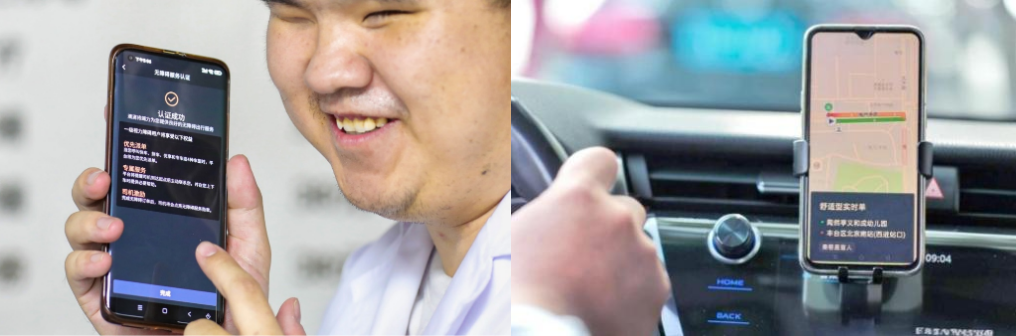
To effectively safeguard the equal travel rights of over 17 million visually impaired individuals nationwide and actively respond to the implementation requirements of the Accessibility Environment Construction Law, the Digital and Intelligent Mobility Working Committee (Preparatory) of the Internet Society of China (ISC) recently launched a special initiative to build ride-hailing accessibility services for visually impaired users.
The Committee is collaborating with multiple ride-hailing service platforms to develop a full-chain accessible travel service system, facilitating convenient travel for the visually impaired.
In this special initiative, the Working Committee has refined its measures across four core dimensions:
1. Online Platforms
Guide cooperating platforms to fully adapt to mainstream screen-reading software, ensuring accurate recognition and voice reading of key interface elements in mobile apps and Mini-programs.
Establish a dedicated verification channel for visually impaired users, providing priority order dispatching services for Level 1 and Level 2 visually impaired users who pass verification. Clarify the scope of accessible service benefits, and enable high-contrast mode and large font display.
Provide voice call or screen-reading compatible online customer service channels, and deliver clear voice prompts at critical operational stages (e.g., order placement, driver acceptance) and when the driver arrives.
2. Offline Services
Ensure sufficient rear-seat space reserved for users with guide dogs. Require drivers to proactively confirm the pick-up location via phone after accepting an order and assist users by greeting them upon arrival.
Provide help his/her stand or walk upon the user's consent when boarding or alighting, confirm the user's safety upon arrival, and guide them to a safe area. During the journey, proactively assist in adjusting seats, air conditioning, and other equipment. Explore diverse accessible interaction methods for autonomous driving vehicles.
3. Driver Qualifications
Establish a standardized training system to enhance drivers' awareness of inclusive service and standardized communication skills, and train them in practical skills such as clock-wise orientation guidance and arm-assisted leading.
Award certified drivers with exclusive identification badges. Implement positive incentive mechanisms, including point-based rewards and additional subsidies.
4. User Safety and Privacy
Optimize the accessibility sharing function for trip details, and add an emergency assistance channel.
Strictly regulate the collection and use of visually impaired users' personal information, sharing only necessary service details with drivers to protect privacy. Establish a convenient feedback and complaint channel with a priority handling mechanism.